Text to speech turns study material into audio, which changes when and how often you can review: notes become something you replay on the bus, at the gym, or while making dinner. With an app like Focal Voice, anything you're studying — lecture notes, textbook chapters, papers, even photographed handouts — becomes a track in your review playlist.
Why studying by listening works
- More repetitions, less friction. The hardest part of reviewing is sitting down to do it. Audio removes the sitting down — dead time becomes review time, and repetition is what makes material stick.
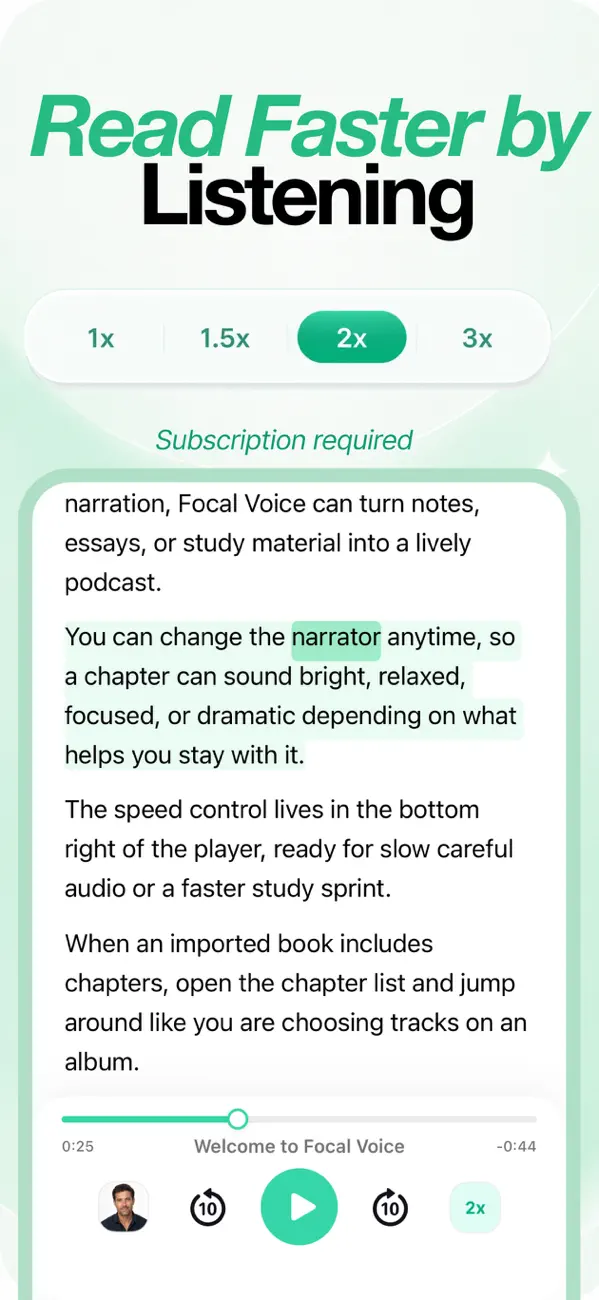
- Two senses beat one. Following the synced highlighting while you listen pairs the audio with the visual text — a multi-sensory pass that many students find easier to stay focused on than silent re-reading.
- Pace control. First exposure at 1×, familiar material at 2×–3×. You spend attention where the difficulty is.
Honest note: listening isn't a magic upgrade over reading — it's a way to get more passes with less resistance. Pair it with active recall (pause and predict what comes next) and it earns its keep.
What to turn into audio
- Your own notes — paste them in, or import the PDF/DOCX export from your notes app.
- Textbook chapters — import DRM-free EPUBs or PDFs; chapters stay navigable (see eBook to audiobook).
- Papers and readings — the assigned PDF becomes a 25-minute listen (see listening to PDFs).
- Printed handouts — scan them with the camera.
A study-by-listening routine that works
- Sunday: import the week's readings and notes into Focal Voice — five minutes.
- During the week: first pass on commutes at 1×–1.5×, following the highlights when you can look at the screen.
- Before the exam: generate an AI podcast from your notes — hearing two hosts discuss the material is a surprisingly effective final review — then re-listen to the tricky sections at 1×.
- Offline days: download the audio ahead of time and study anywhere, connection or not.
Frequently asked
Do I retain as much from listening as from reading?
Research on comprehension generally finds listening and reading comparable for most material — and the combination (listening while following the text) is stronger than either alone for staying engaged. The bigger win is frequency: audio reviews happen in time you weren't using.
What speed should I study at?
Start at 1× for new material and step up. Most people are comfortable at 1.5×–2× on a second pass; 3× is for final skims of material you already know.